Residential vs Commercial Roofing: Key Differences
Residential and commercial roofing differ mainly in slope, materials, and installation. Homes use steep-slope asphalt shingles for looks and shedding water, while commercial buildings use low-slope membranes like TPO, EPDM, or metal to cover large flat areas, handle rooftop equipment, and seal against standing water and Minnesota snow loads.
Published August 3, 2023 · by T-10 Construction
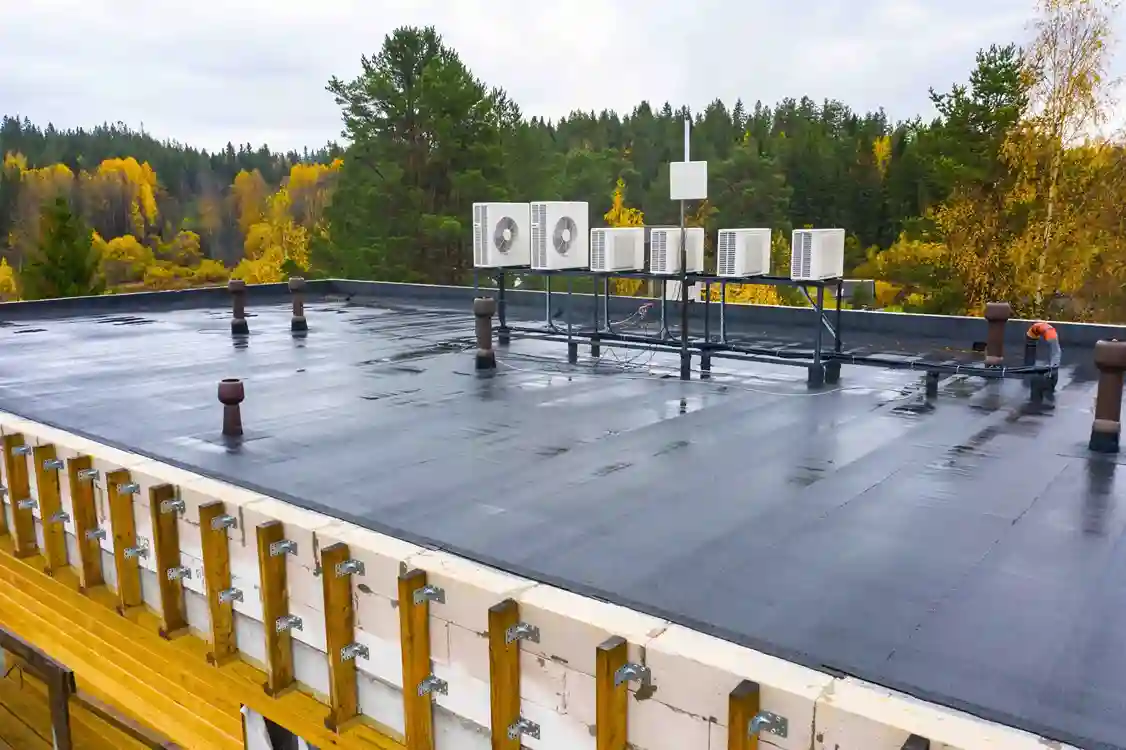
Residential and commercial roofs solve the same basic problem—keeping weather out—but they go about it in very different ways. The biggest differences come down to slope, materials, and installation. Homes typically get steep-slope asphalt shingles built to shed rain and snow and boost curb appeal, while commercial buildings get low-slope membrane or metal systems built to cover wide flat spans, support rooftop equipment, and resist standing water. Here is how the two compare and how to choose the right approach for your Minnesota property.
What is the main difference between residential and commercial roofing?
Slope is the dividing line. A residential roof is steep-slope, meaning it pitches at an angle so water and melting snow run off quickly. A commercial roof is usually flat or low-slope, which spreads a large footprint across one broad plane. That single difference drives almost everything else—the materials that work, the way the roof is installed, and how it has to be maintained over its lifetime.
- Residential: steep pitch, smaller footprint, multiple slopes and angles (gable, hip, dormers), built for water shedding and appearance.
- Commercial: flat or low slope, large continuous surface, designed around HVAC units, vents, and drainage rather than curb appeal.
What materials are used for residential vs commercial roofs?
Steep slopes and flat roofs call for completely different products. On homes, asphalt shingles dominate because they balance cost, durability, and looks—T-10 installs Atlas shingles along with other leading asphalt brands, and we also work with metal and other steep-slope options. Flat commercial roofs rely on single-ply membranes and metal systems engineered to seal a wide surface and survive ponding water. Learn more on our residential roofing and commercial roofing service pages.
- Residential materials: asphalt shingles (Atlas and other leading brands), with metal and other steep-slope options where they fit the home.
- Commercial materials: TPO and EPDM single-ply membranes, plus standing-seam and other metal systems for low-slope and flat decks.
How does the installation process differ?
Shingle roofs are installed course by course up the slope, with extra detail work around valleys, chimneys, dormers, and the many angles a typical home has. Commercial membrane roofs are a different craft entirely: large sheets of TPO or EPDM are rolled out and then mechanically fastened, ballasted, or fully adhered, with seams heat-welded or sealed and flashing built around every drain, curb, and piece of rooftop equipment. Commercial work also tends to involve more coordination with building codes, fire ratings, and energy requirements, which is why ongoing professional inspection matters more on a flat roof.
Which type lasts longer?
Lifespan depends on the material and how well the roof is maintained, not simply on whether it is residential or commercial. A quality asphalt shingle roof on a Minnesota home generally lasts around 20 to 30 years. Commercial membrane and metal systems can run longer—often 20 to 40-plus years—because they are built for durability, foot traffic, and equipment loads. In our climate, the deciding factor is usually weather damage and upkeep rather than the calendar.
How do I know which type I need?
Look at the building first. If you own a single-family home, a townhome, or a small multi-family property with a pitched roof, you are firmly in residential territory and shingles are almost always the right call. If you manage a warehouse, retail strip, office, apartment block, or church with a wide flat or low-slope deck, you need a commercial membrane or metal system. The gray area is large custom homes with flat sections and small commercial buildings with steep roofs—in those cases the slope of each section, not the building type, decides which system goes where. A contractor who installs both can spec the right material for every plane instead of forcing one approach across the whole roof.
How does Minnesota weather affect both roof types?
The Upper Midwest is hard on every roof. In the Twin Cities north metro—Oak Grove, Ramsey, Andover, Coon Rapids, Ham Lake, and out toward Zimmerman, Big Lake, and Elk River—we see summer hail and straight-line wind that bruises and tears shingles, then winters that pile on snow load and create ice dams along eaves. Flat commercial roofs face their own version: heavy snow accumulation and meltwater that has nowhere to drain quickly, which makes membrane seams and flashing the first things to fail. Either way, a roof that looks fine from the ground can be hiding storm damage, which is why a professional inspection after a rough season is worth it on both homes and buildings.
Not sure whether your shingles or your flat roof took a hit this season? T-10 Construction offers free, no-pressure inspections across Minnesota, Wisconsin, and Iowa, and we handle insurance claims from start to finish. Call us at (612) 567-5650 and we will tell you straight what your roof actually needs.