
How Much Should Shingles Overhang the Roof Edge?
Shingles should overhang the roof edge by about 1/4 to 3/4 of an inch when a drip edge is installed, or up to roughly 1.5 inches without one. That small lip directs rainwater off the fascia and into the gutters, protecting the wood deck and trim underneath while keeping the shingles fully supported.
Published July 25, 2022 · by T-10 Construction
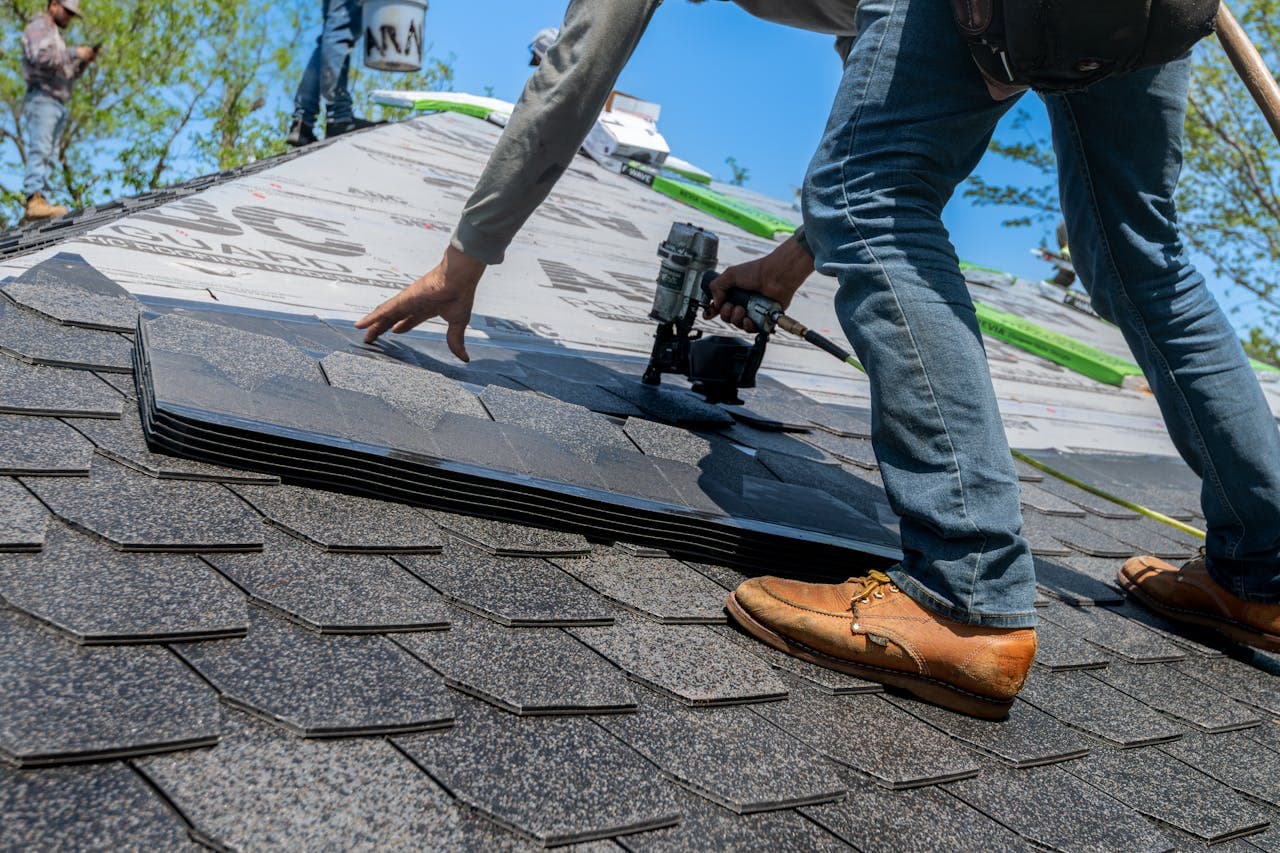
Shingles should overhang the roof edge by about 1/4 to 3/4 of an inch when a metal drip edge is installed, or up to roughly 1.5 inches if there is no drip edge. That short overhang, sometimes called the shingle reveal, carries water past the fascia and into the gutters so it never wicks back onto the wood underneath. Too little and water creeps behind the edge; too much and the unsupported shingle tips crack, curl, or tear off in the wind.
Why does shingle overhang matter?
The overhang is the last line of defense at the most vulnerable part of your roof: the edge. Done right, it pushes runoff away from the fascia board and drops it cleanly into your gutters. Done wrong, water tracks back under the shingles and soaks the roof deck, the starter course, and the trim, the exact spots that rot first and cost the most to repair.
Edge problems rarely stay small. Because shingles are installed from the bottom up, a rotted deck board or starter strip means tearing off courses from above to reach it. A correct overhang, paired with a quality residential roof installation, keeps that water moving and your structure dry for the life of the roof.
How far should shingles extend past the drip edge?
A drip edge is the L-shaped metal flashing installed along the eaves and rakes before the shingles go on. It is the standard, and on most Minnesota homes it is required by code. With a drip edge in place, the right numbers are:
- 1/4 to 3/4 inch of overhang past the drip edge, on both the eaves and the rake edges
- Up to about 1.5 inches if, for some reason, no drip edge is present (not recommended for new work)
- A consistent reveal along the whole edge, so water sheds evenly instead of pooling at low spots
Stay inside those ranges and rain clears the metal and lands in the gutter trough. Go shorter and water can curl back behind the drip edge; go much longer and you lose the support the deck provides.
Can shingles overhang too much?
Yes, and it is a common DIY mistake. Once a shingle reaches past roughly 3/4 of an inch over a drip edge, the tab is hanging in open air with nothing behind it. Three things start to go wrong:
- The unsupported edge sags, cracks, and breaks off, especially in cold weather when asphalt shingles get brittle
- Wind gets under the loose tabs and peels them back, a real concern during the straight-line winds and storms that roll across the north metro
- Runoff overshoots the gutter entirely, dumping water against the foundation instead of into the downspouts
That last point is why overhang and drainage go hand in hand. If your shingles overshoot or your gutters and downspouts cannot keep up, the water has to go somewhere, and it usually finds your siding, your fascia, or your basement.
How do I check my shingle overhang?
You do not need to climb on the roof to get a rough read. From the ground or a ladder, look along the eaves where the shingles meet the gutter and sight down the edge: the shingles should peek just past the metal drip edge by a finger-width or so, in a straight, even line. If the edge wanders, if you can see daylight or sagging tabs hanging well past the metal, or if the shingles stop short of the drip edge, those are the warning signs worth a closer look.
Check the rake edges, the sloped sides of the roof, the same way. The overhang target is the same there, but rakes catch more wind, so loose or over-extended shingles show up first as lifted or curled corners. Pair what you see with what is happening below: streaks on the fascia, peeling paint on the trim, or water marks behind the gutter all point back to an edge that is not shedding the way it should.
Why overhang matters more in Minnesota
Roof edges take the worst of an Upper-Midwest winter. As snow melts and refreezes, ice dams build up right at the eaves, the same zone the overhang protects. A correct reveal over a clean drip edge gives meltwater a path off the roof instead of letting it back up under the shingles and into the deck. Add summer hail and the wind that hammers Anoka County towns like Oak Grove, Ramsey, Andover, Coon Rapids, and Ham Lake, and a sloppy or overly long edge becomes the first thing to fail.
It is also one of the easiest details to get wrong on a quick reroof. When we inspect storm or age-related damage around the Twin Cities, the edge is one of the first places we look, because a bad overhang quietly invites years of hidden water damage.
Not sure whether your shingles are hanging right or letting water sneak behind the edge? T-10 Construction offers a free, no-pressure roof inspection across Minnesota, Wisconsin, and Iowa. We will check your overhang, drip edge, and gutters and tell you exactly where you stand. Call (612) 567-5650 to set it up.