
Signs Your Commercial Roof Needs Repair Now
Most commercial buildings have flat or low-slope roofs. You can't see them from the parking lot, so the first clues usually show up inside. That's why it helps to know what to look for on both levels.
Signs you'll notice inside the building:
- Brown or yellow rings on ceiling tiles, especially ones that grow after each rain
- Drips near light fixtures, vents, or along the top of walls
- A musty or damp smell in one area of the building
- Peeling paint or bubbling drywall near the top of a wall
- Ceiling tiles that visibly sag
Signs visible from a safe location or in a roofer's inspection photos:
- Puddles that are still there a day or two after the rain stops
- Bubbles, blisters, or soft spots in the roof surface
- Cracks, splits, or seams that are pulling apart
- Flashing that's loose or bent where the roof meets a wall, vent, or rooftop unit
- Clogged drains or gutters with debris piled around them
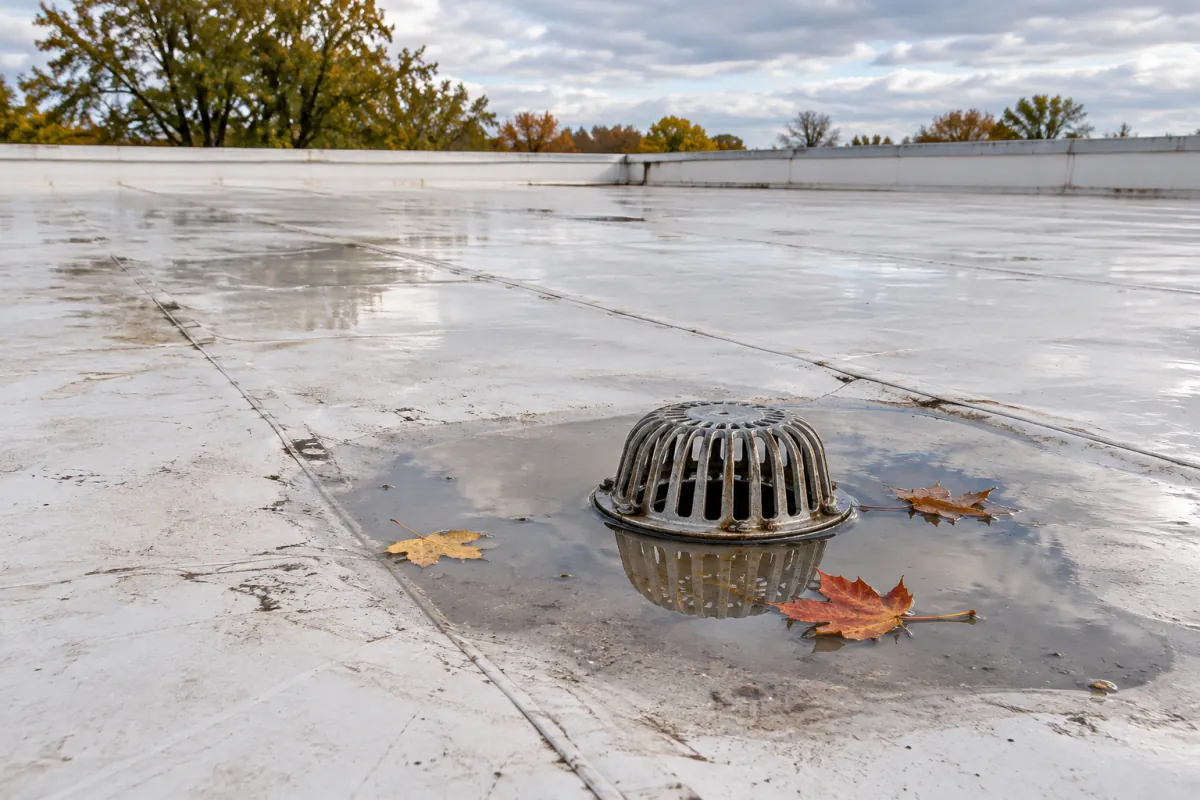
Flat and low-slope roofs rely on drainage, and water can collect where drainage is poor. Once it gets below the roof surface, it can travel through the insulation before it drips into the building. A stain over the break room might come from an opening several feet away. Wet insulation may need to be removed and replaced, which can turn a patch into a larger repair.
Picture a property manager who spots one small brown ring on a ceiling tile after a heavy storm. It's easy to swap the tile and move on. But if a new ring shows up a few weeks later, or the first one spreads, the leak is still active and still feeding water into the roof.
An old stain may be left over from a resolved leak. Compare photos taken from a safe location after rain. If it spreads, drips return, or tiles sag, contact building maintenance. Keep people clear of sagging tiles and water near electrical fixtures.
Why the Leak Spot Isn't Always the Problem Spot
The drip inside your building shows you where water finally found a way out. It doesn't show you where it got in. Water can run a long way under a flat roof before it drops through, as we covered above. The most important part of any repair is finding the real entry point. If the wrong spot gets fixed, you'll see a fresh stain after the next storm.
On a flat or low-slope roof, leaks tend to start in a few familiar places:
- Flashing around rooftop units, vents, and pipes, anywhere the roof has been cut to let something through
- Seams where two sheets of roofing are joined and the bond has started to let go
- Parapet walls and their caps, where water can get into the wall and run down inside it
- Drains and scuppers, where a clog holds a pool of water against the roof for days
- Old patches that covered a problem without fixing it
- Spots near equipment where people walk, kneel, or drop tools during service calls
Here's how a lot of repairs go wrong. Someone climbs up, finds the spot right above the stain, and spreads sealant over anything that looks worn. The ceiling stays dry for a while, so it seems fixed. Then the stain comes back, because the real opening was at a vent curb twenty feet away. The whole time, water kept soaking the insulation underneath. Layers of extra sealant can also slow down the next roofer, since they have to dig through old patches to see what's really there.
Picture a strip mall where a tenant keeps reporting a drip along the back wall. The roof above that spot looks fine. The real problem is a gap in the cap on top of the parapet wall. Rain gets in at the top, runs down inside the wall, and shows up as a wet stripe near the ceiling. Patching the roof over that tenant would never stop it.
Finding the source takes some detective work. A careful roofer starts at the stain and works outward. They check openings, seams, and edges and look at how water drains. On tougher leaks, they may use a controlled water test to narrow down possible entry points.
Before you approve a repair, ask a few plain questions. Where might the water be getting in? How do you know? Is there wet insulation, and how much? Can you show me photos?
This also matters if you're comparing a repair to bigger roofing work in Ramsey. Once you know the real entry point and how far the water has spread, you can tell whether a targeted fix will hold or whether a larger section needs attention. Without that, you're choosing blind.
Common Commercial Roofing Problems and Repair Methods
The right fix depends on two things: what your roof is made of and what failed. A patch that holds well on one type of roof can peel off another in a single season. If you don't know your roof type, check old invoices or building records, since they often name it. A roofer can also tell you after a few minutes on the roof.
Common single-ply roof membranes include TPO, PVC, and EPDM. Some commercial roofs use asphalt-based layers or metal panels. Building records or a roofing inspection can help identify the system.
These are examples of repairs a roofer may recommend after checking the roof condition and the manufacturer's guidance:
- Seams pulling apart. Depending on the system, a roofer may heat-weld a compatible membrane patch or use an approved tape or patch for a rubber membrane.
- Failed flashing. A roofer may replace or repair the flashing around walls, rooftop equipment, or pipes with materials that fit the roof system.
- Punctures and tears. Dropped tools, foot traffic, and debris can damage a membrane. The roofer may use a compatible patch after inspecting the surrounding area.
- Blisters. On asphalt-based roofs, air or moisture can lift the top layers. A roofer can determine whether to monitor the blister or repair the affected area.
- Ponding water. Clogged drains get cleared first. If a low spot still holds water, a roofer may add tapered insulation or a new drain so water moves off the roof instead of sitting on it.
- Metal roof leaks. The contractor can check seams, corrosion, and fasteners before deciding what to repair or replace.
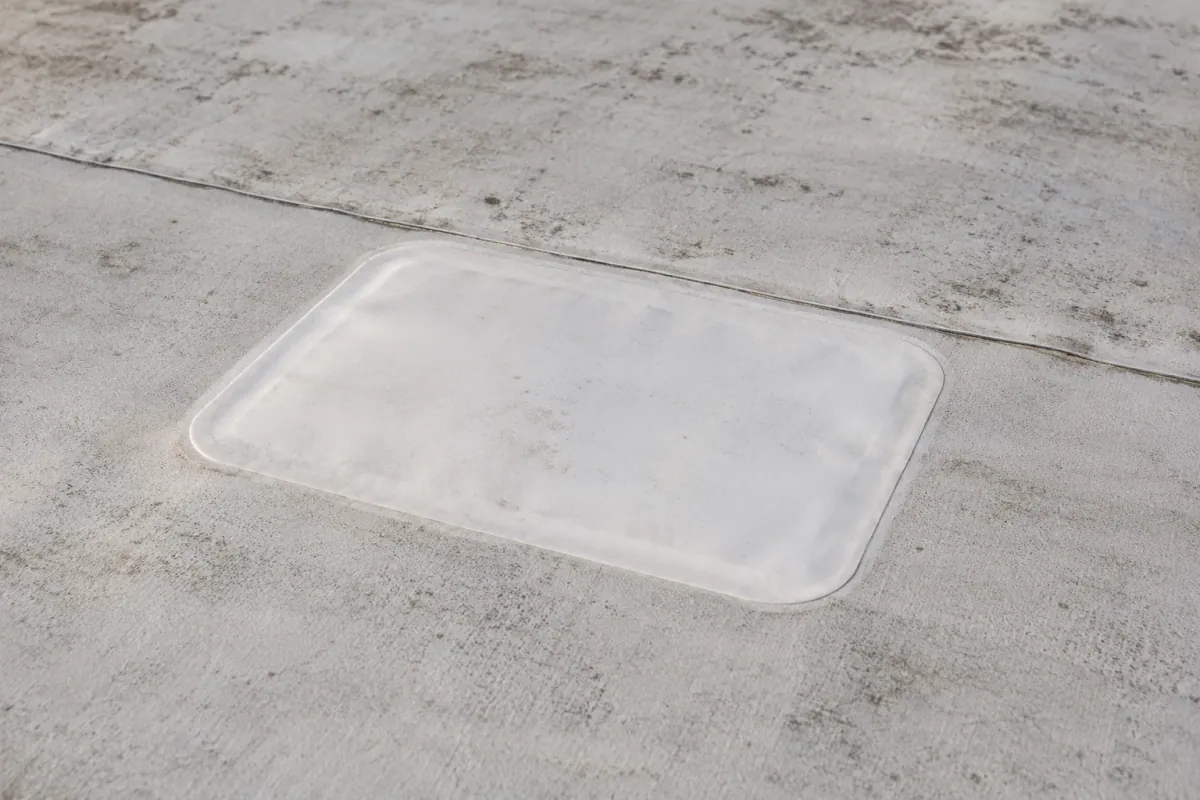
Repair materials need to be compatible with the roof system. Ask what materials the contractor proposes and why they fit the existing membrane or metal.
A lasting repair also has to start on a clean, dry surface. If water has already soaked the layers below, the wet insulation we talked about earlier has to come out before any patch goes on top. Sealing a patch over wet material just traps the water in.
When you get a repair proposal, look for three things. It should name your roof type, name the specific problem, and describe a method that fits both. If it just says "seal leaks" or "patch as needed," ask what material will be used and how it'll be attached.
When Repair Is Enough and When Replacement Makes Sense
A repair is enough when the damage is limited to a few spots and the rest of the roof is still dry and solid. Replacement starts to make sense when water has spread under large parts of the roof, or when new leaks keep showing up so often that repairs cost more than they save. Most of the time, the answer depends on how much of the roof is still healthy, not on how old it is.
An older roof isn't automatically a lost cause. If the surface and seams are sound and damage is localized, a targeted repair may extend the roof's service life.
Repair is usually the right call when:
- The leak traces back to one or two clear entry points
- Wet insulation is limited to a small area that can be cut out and replaced
- The roof surface is still flexible, without widespread cracking or shrinking
- This is the first real leak in a long while, not the fifth this year
Replacement deserves a serious look when:
- Wet insulation runs across large sections of the roof
- Seams are failing in many places at once, not just one
- The surface is brittle, cracked all over, or pulling away from the edges
- New leaks keep showing up in different spots after each repair
- The deck underneath is soft, rusted, or sagging
How do you know how much insulation is wet when you can't see under the roof? Ask for a moisture check. Roofers can take small core samples or use moisture scanning tools to map wet areas. That map turns this from a guess into a real choice. If only a small patch shows up wet, repair makes sense. If the wet area covers a big share of the roof, patching around it just leaves soaked material in place.
Think about the money over time, too. Add up what you've spent on leak calls in the last couple of years. If that number keeps climbing and the leaks keep moving, you're paying for a new roof in small pieces without ever getting one.
If the roof is near the end of its life, a temporary repair may limit water entry while you plan and budget. Ask the roofer whether the proposed work is temporary or permanent.
A fair recommendation should come with proof: photos of the damage, the moisture findings, and a plain reason why the rest of the roof can or can't be saved. If someone pushes replacement without showing you that, get a second look.
What Happens During a Commercial Roof Repair Visit
A good repair visit has four parts: getting onto the roof, confirming the problem, fixing it, and showing you it's done. When you know what each part should look like, it's easier to get ready and easier to spot a rushed job.
Before the roofer shows up, a little prep saves time and keeps the visit focused. Have these ready:
- Roof access, such as the hatch location, a ladder, and any keys or codes they'll need
- A short list of where leaks showed up and when, especially after which storms
- Old repair invoices or building records, which often name the roof type and past patch spots
- A heads-up to tenants that someone will be on the roof and may need to look at ceilings inside
- Keep the area below active leaks clear of people and tell the crew about nearby lights, wiring, or sagging ceiling tiles.
Expect the roofer to start inside, at the stain, before going up. That's where the tracing we covered earlier begins. Once they're on the roof, they'll confirm the entry point and check how far the damage goes.
The next step matters a lot. If the roofer finds more than expected, like a bigger wet area or a second bad seam, they should stop and tell you before they add work. You should hear what they found, see photos, and approve any change in the plan. Surprise extra charges after the fact are a warning sign.
The repair itself can be noisy. Cutting out wet insulation, heat-welding seams, and driving new fasteners all make sound that tenants below may hear, so it helps to warn them ahead of time. Weather plays a part too. Since most repairs need a clean, dry surface, rain can push the work to another day.
Sometimes a roofer uses a temporary patch to limit water entry, then returns for the permanent repair once materials arrive or conditions allow. Ask when the roofer expects to follow up.
Before the roofer leaves, you should get:
- Before and after photos of the exact spot that was fixed
- A plain written note of what was repaired, where, and what material was used
- A clean roof, with old flashing, scrap pieces, and loose screws picked up, since debris left behind can clog drains or poke new holes
- Clear drains near the repair area
Keep that note and those photos with your building records. They'll help any roofer who works on the roof later, and they make it easier to spot a pattern if leaks keep coming back.
After the next hard rain, look for new stains or drips from a safe location. If they return, call the roofer with the date and a photo you can take safely.