What a Pole Barn Re-Roof Involves
Most folks picture a metal re-roof as a quick panel swap. Pull the old sheets, screw on new ones, done by lunch. But that's not how a good job goes. The panels are the last step, not the first.
New panels come after the inspection and any needed framing repairs. Ask how the crew will reach the building, protect equipment, and deal with the weather while the roof is open.
Many metal pole barn roofs rest on purlins, the supports that run across the trusses. Snow, wind, and moisture can affect the panels, fasteners, and framing. A roofer needs to check what is holding the metal before choosing the work.
- Inspection first. A contractor checks the roof, trusses, and purlins for rot, cracks, or sagging using safe access.
- Tear-off or overlay decision. The roofer considers framing strength, added weight, slope, local requirements, and the manufacturer's approved assembly.
- Framing repair. Address damaged material before putting on new panels. Suspect trusses or posts may need a structural evaluation.
- Condensation control. Ask how the barn's use, insulation, and ventilation will affect the choice.
- Panel install. New panels go on with new screws, set at the right spacing for snow and wind.
- Trim and closures. Ridge cap, eave trim, gable trim and foam closures seal the edges against snow and critters.
Each step matters. Skip one and you'll feel it a few winters later.
Condensation can drip on equipment or hay when warm, moist air meets cold metal. Raising the issue while the roof is being scoped gives the contractor a chance to discuss ways to manage moisture during the re-roof.
Ramsey winters add their own pressure. Snow and ice can build up on a low-pitch roof. Melting and refreezing can reveal weak seams or fasteners.
Removing old panels can expose damage hidden from below. Ask what the estimate allows for damaged purlins discovered after tear-off.
How long does it take? Timing depends on building size, framing repairs, material availability, and weather. Ask how the contractor will protect stored items if the roof is open during the project.
You don't need to know every detail to plan well. But knowing these stages helps you ask better questions. It also helps you spot a contractor who's cutting corners. If someone quotes a metal re-roof without looking at the framing, that's a red flag.
Signs Your Pole Barn Roof Needs More Than a Patch
An isolated leak may be repairable. Widespread corrosion or recurring leaks deserve a closer look before you pay for another patch.
Look at the roof as one system. A roofer can check whether corrosion or leaks affect one area or extend across panels, fasteners, and supports.
Here's what we look for when we walk a pole barn roof:
- Rust that's spread past the surface, especially along laps, ridges, and the bottom edge of panels
- Screws that are backing out or have cracked, dried-up rubber washers across large areas
- Leaks that show up in new spots every time you fix an old one
- Daylight you can see from inside the barn when the doors are shut
- Visible sagging of panels or framing
A roofer can tell you whether the issue is isolated and which parts of the roof need attention.
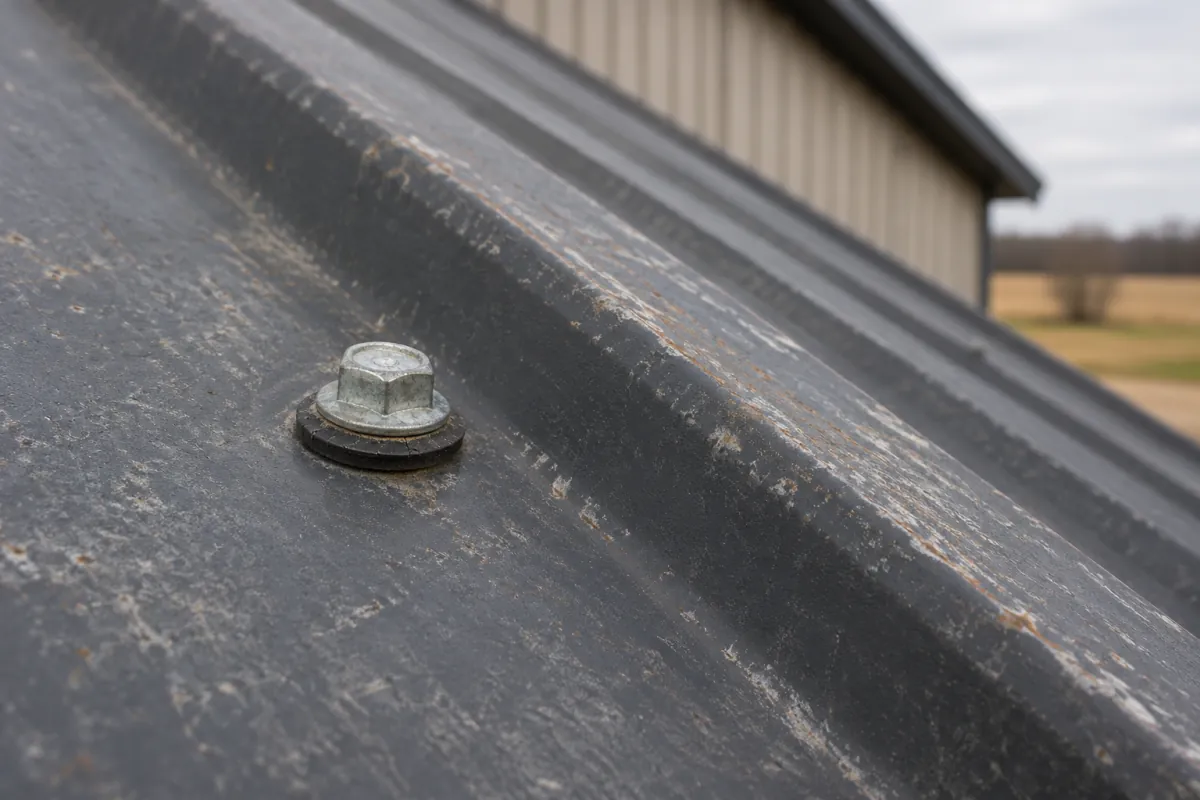
Deteriorating washers or loose screws can let water enter at fastener locations. A roofer can determine whether fastener replacement is suitable.
Snowmelt and refreezing can reveal weak seams that stayed dry in warmer weather.
From a safe place at ground level, note visible water stains, gaps, or sagging. If framing is sagging or looks unstable, keep people clear and arrange a professional structural assessment. Leave close inspection to a professional.
Framing repairs can add substantially to the cost. Ask what the estimate includes and how the contractor will price and approve anything discovered after tear-off.
What's inside the barn matters too. Stored hay, equipment, or livestock can't take steady drips. If a leak puts that at risk, the math on patching gets ugly fast. If you're weighing your options, it helps to understand how metal roofing in Ramsey holds up against our snow loads and long winters before you decide.
A professional inspection can help you decide whether repair or replacement fits the condition of the roof.
Why the Structure Underneath Matters as Much as the Metal
Most people planning a metal re-roof start by picking a panel color. That makes sense. It's the part you'll look at every day. But the steel is only as strong as the frame it's screwed into.
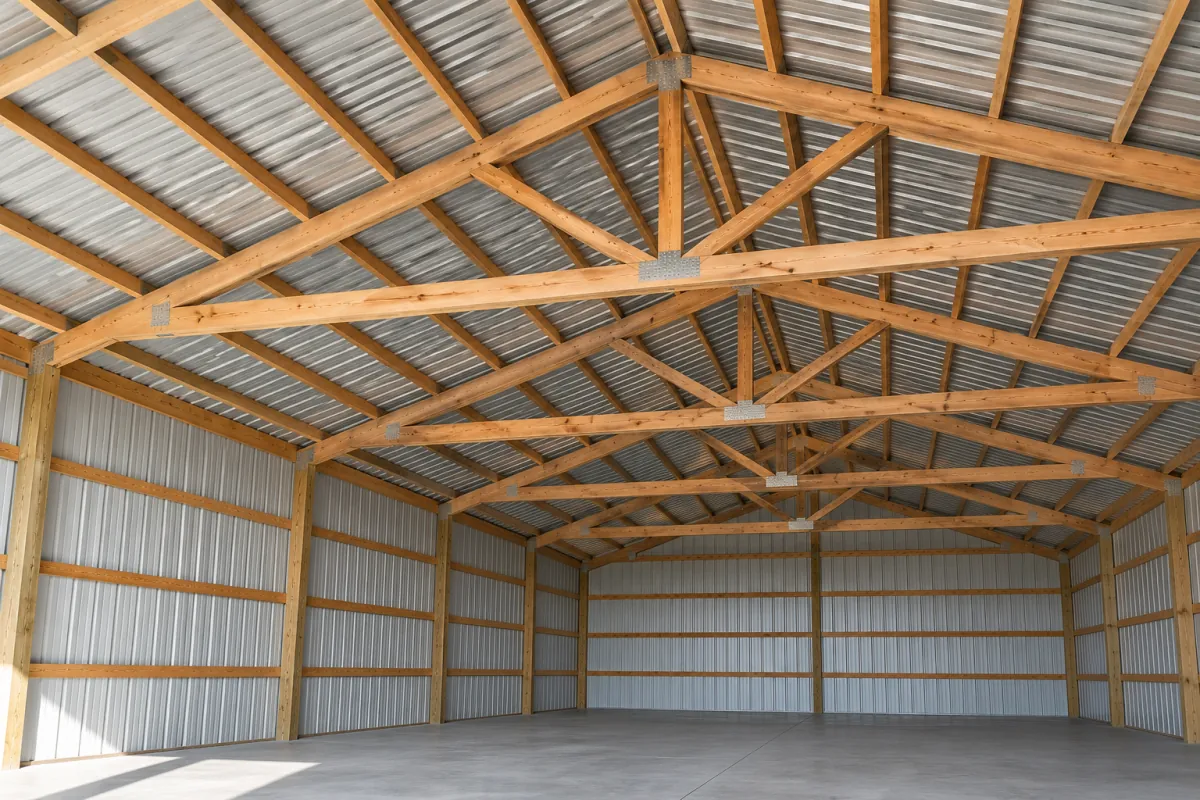
Many pole barns lack solid roof decking. On those buildings, the panels attach to purlins that are supported by trusses and posts.
New steel won't fix old wood.
Before a metal re-roof, ask the contractor to check these areas:
- Purlins with soft spots, cracks, or rot near the eaves where water tends to sit
- Purlin spacing that's too wide for the new panels you want to use
- Trusses with a sagging bottom chord, split webs, or loose metal plates
- Posts rotting right at the dirt line, which is common on older barns
- Dark water stains on the wood that point to old leaks or condensation
Snow can drift against a taller neighboring structure, and rot can weaken existing framing. Both are worth discussing before adding or replacing panels.
If framing is sagging, damaged, or previously altered, ask whether a structural engineer should evaluate it. Check with Ramsey Building Permits and Inspections about requirements for your project.
Tear-off can make hidden framing accessible and give you a chance to address condensation before the new roof goes on.
Most folks don't think about any of this until a leak shows up. You're ahead of the game just by reading this.